
What Is Modern Orthodontic Technology, and Why Does It Matter?
Modern orthodontic technology refers to digital tools like CBCT 3D imaging, intraoral scanners, AI-driven monitoring, and in-house 3D printing. These tools replace guesswork with treatment plans built on actual measurements, producing more predictable results, shorter treatment times, and a better overall experience for patients.
Ten years ago, getting braces meant biting into a tray of gooey putty and hoping for the best. Today, digital workflows capture detailed information about your teeth, roots, and jaw structure before a single bracket is placed or aligner is worn. Your orthodontist can simulate exactly how your teeth will move. Potential issues get flagged before they become real problems.
For families weighing their options, that kind of predictability matters. It means less time in the chair, fewer disruptions to your schedule, and a clearer picture of what to expect from day one. Practices in the Bixby, OK area and across the Tulsa metro have increasingly adopted these tools, and patients are noticing the difference in both comfort and outcomes. Whether you’re considering clear aligners or traditional braces, the technology behind your treatment plan plays a major role in how smoothly everything goes.
The Digital Workflow: Technology at Each Stage of Treatment
Understanding how these technologies work together helps you see why modern treatment plans are built on precision rather than educated guesses. Here’s what happens at each stage:
CBCT 3D Imaging: The Full Picture
Before treatment begins, a cone beam computed tomography (CBCT) scan captures your full jaw and root anatomy in three dimensions. Unlike flat X-rays, this imaging shows exactly where your tooth roots sit, how much bone surrounds each tooth, and whether any hidden issues might affect treatment. Your orthodontist can rotate and examine this digital model from any angle, so nothing gets overlooked.
Digital Scans Replace Traditional Impressions
An intraoral scanner glides over your teeth and gums, capturing thousands of images per second to build a precise 3D model of your mouth. The whole scan takes just a few minutes, and you can see your teeth on screen right afterward. No goop, no gagging, no waiting.
Software That Maps Every Tooth Movement
Using the data from your CBCT and intraoral scans, specialized software maps out exactly how each tooth needs to move. Your orthodontist designs a treatment plan by adjusting variables until the predicted outcome matches your goals. You’ll often see a simulation of your future smile before treatment even starts.
In-House 3D Printing for Faster Turnaround
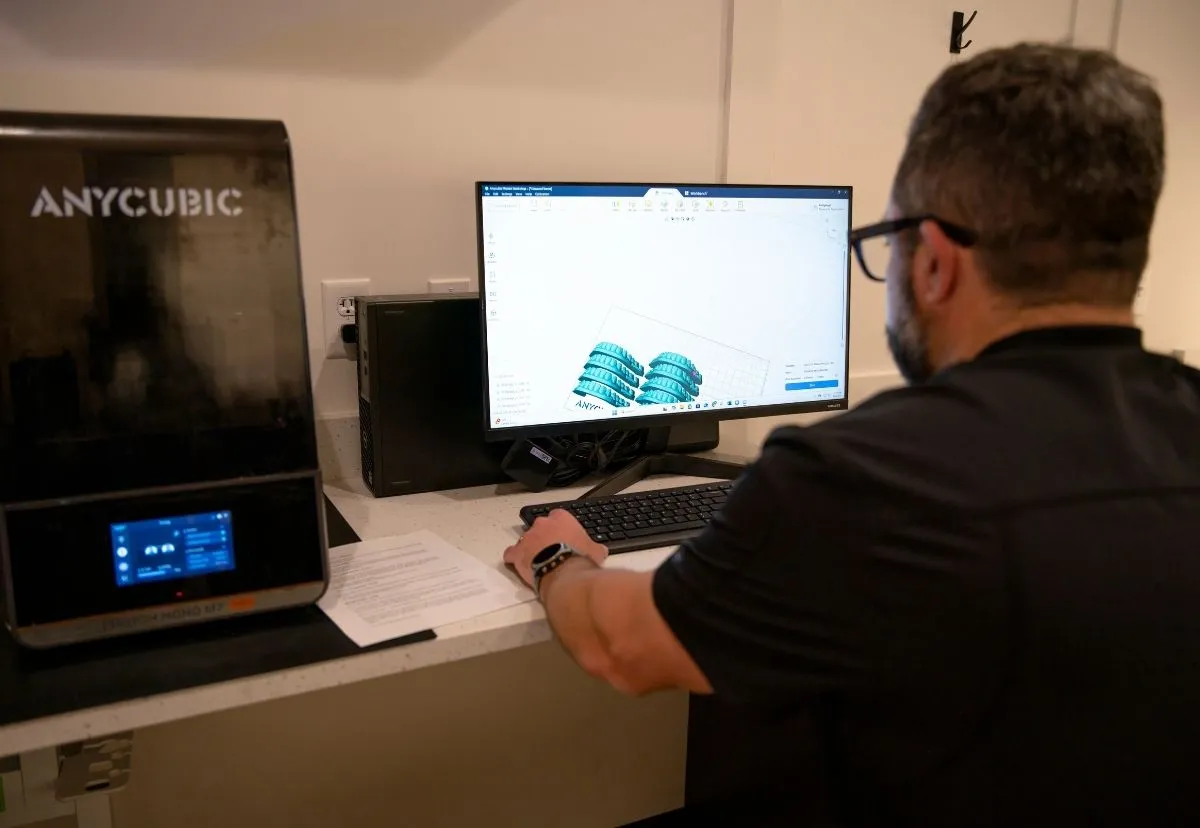
When custom aligners, brackets, or other appliances are needed, in-house 3D printing produces them on demand. This speeds up your treatment start date and allows for quick adjustments if your plan needs to change. No more waiting weeks for a lab to ship parts.
DentalMonitoring: Progress Tracking Between Visits
Between office visits, DentalMonitoring uses your smartphone to track how your teeth are moving. You scan your teeth at home using the app, and AI analyzes whether everything is progressing as planned. If something looks off, your care team knows right away, often before you’d notice anything yourself.
5 Benefits of Tech-Driven Orthodontic Treatment
Here’s a quick summary of what digital orthodontic tools bring to your care:
- Digital simulation before treatment starts means your orthodontist can show you predicted results and plan around potential complications, not just react to them.
- Fewer in-office visits. Remote AI monitoring handles routine check-ins, so you only come in when there’s actual work to be done.
- Your scans are faster and more comfortable since digital impressions replace the old putty trays entirely.
- Custom appliances get printed on-site, cutting out third-party lab wait times.
- Tracking issues get caught early through AI monitoring, before they have a chance to extend your timeline by weeks or months.
When your orthodontist can simulate treatment before it begins, there’s less room for surprises. The software accounts for how teeth actually move through bone, which means the plan you approve is the plan you get. According to a 2020 study published in the Angle Orthodontist, digital treatment planning with intraoral scanners showed clinically significant improvements in aligner fit accuracy compared to traditional impression methods. That kind of precision keeps treatment on schedule and reduces the need for mid-course corrections.
If you’re a busy parent, college student, or anyone with a packed schedule, remote monitoring is especially valuable. DentalMonitoring handles routine check-ins from your phone, and you reserve office visits for when they’re actually needed.
Traditional Orthodontics vs. Digital Orthodontic Methods
Here’s how a digital workflow compares to traditional orthodontic methods:
| Aspect | Traditional Approach | Digital Approach |
|---|---|---|
| Impressions | Gooey putty trays that can trigger gag reflex | Comfortable intraoral scanner, done in minutes |
| Imaging | 2D X-rays with limited root visibility | CBCT 3D imaging shows full jaw and root anatomy |
| Appliance Fabrication | Sent to outside lab; wait times of 1-3 weeks | In-house 3D printing for faster turnaround |
| Progress Monitoring | Monthly in-person check-ups required | DentalMonitoring app tracks progress remotely |
| Treatment Planning | Based on physical models and clinician experience | Digital simulation predicts tooth movement precisely |
| Mid-Course Corrections | Often discovered at appointments; may extend treatment | Detected early through AI monitoring; addressed quickly |
| Learning Curve | Familiar workflow for most practices | Requires investment in training and equipment |
Worth noting: traditional methods still produce good results, and experienced orthodontists have been straightening teeth successfully for decades without these tools. The digital approach doesn’t replace clinical skill. It adds another layer of data that helps your orthodontist make more informed decisions. The biggest practical difference is that digital planning and monitoring reduce the number of mid-course corrections. When your orthodontist can see exactly how treatment is progressing and catch issues early, there are fewer “we need to add a few more months” conversations.
Does High-Tech Orthodontic Treatment Cost More?
No. Tech-driven orthodontic treatment typically costs the same as traditional care because digital tools reduce lab fees, shorten treatment time, and cut down on office visits through remote monitoring. Here’s why the cost stays comparable:
- In-house 3D printing removes third-party lab fees for certain appliances
- Remote monitoring reduces the number of required office visits
- Shorter treatment timelines mean fewer total appointments
- Insurance coverage applies the same way it would for any orthodontic care
Fewer visits also means less time off work or school, less driving, and lower overall hassle for your family. Many practices in the Bixby and Tulsa area offer low monthly payment options to make treatment accessible regardless of which technology is involved. During your free consult, you can typically use a payment calculator to see exactly what your investment looks like. The technology doesn’t inflate your bill. If anything, the efficiencies it creates help keep costs in check.
Who Benefits Most from Tech-Driven Orthodontic Care?
Most patients see real advantages from digital orthodontic tools, but a few groups benefit especially:
- Patients who want efficient timelines. Digital planning keeps your treatment tight, and monitoring tools flag delays early so your orthodontist can course-correct in real time.
- Complex cases. CBCT imaging reveals root positions, bone density, and jaw relationships that 2D X-rays simply can’t show. For patients with impacted teeth, significant crowding, or skeletal discrepancies, this detailed information makes the difference between a good outcome and a great one.
- Busy professionals and students. Between work, classes, and life, frequent orthodontist visits can feel impossible. DentalMonitoring lets you check in from home, reserving office visits for when they’re actually needed. College students away at school especially appreciate this flexibility, and so do working parents juggling multiple schedules.
Whether you’re getting traditional braces, clear aligners, or a combination approach, the same digital planning and monitoring benefits apply. The technology isn’t limited to one type of appliance. It supports every treatment option available at modern orthodontic practices across the Bixby, OK area and beyond.
Frequently Asked Questions About Orthodontic Technology
What Technology Do Modern Orthodontic Practices Use?
Practices using a digital workflow typically rely on CBCT 3D imaging for detailed jaw and root visualization, intraoral scanners for digital impressions, DentalMonitoring for remote progress tracking, and in-house 3D printing for custom appliances. These tools work together throughout your treatment to create more predictable results. Not every practice uses all four, so it’s worth asking during your free consult what specific tools are part of your care.
Is DentalMonitoring as Accurate as In-Person Checkups?
Yes, for routine progress monitoring, DentalMonitoring is highly effective. The app uses AI to analyze photos of your teeth and detect subtle changes that might be missed during a quick visual check. Your orthodontist still sees you in person for adjustments and any hands-on care that’s needed. Think of it as an extra set of eyes between visits, not a replacement for clinical expertise.
Do Digital Braces or Aligners Hurt Less Than Traditional Ones?
The technology itself doesn’t change how tooth movement feels, since that’s determined by the biology of how teeth shift through bone. But better planning can mean more efficient force application, and some patients report that well-planned treatment feels more comfortable overall. The real comfort improvement comes from the scanning process. Digital impressions are dramatically more pleasant than the old putty trays.
How Does 3D Printing Change the Braces Experience?
It’s mostly about speed and flexibility. In-house 3D printing means faster appliance delivery and quick replacements or modifications. If you lose a retainer or need an adjustment to your treatment plan, you won’t wait weeks for a lab to send new pieces. For families in the Bixby and Tulsa area, this also means fewer trips back and forth. Your treatment stays on schedule even when the unexpected happens.
Can I Still Get Traditional Braces If I Prefer Them?
Absolutely. Traditional metal braces remain an excellent option, and they benefit from the same digital planning and monitoring technology. Your treatment will still be designed using 3D imaging and software simulation. You’re just choosing a different appliance to get there. No wrong answer here. Many orthodontists in the Tulsa metro area, including board-certified providers with years of experience, use digital tools to enhance every type of treatment they offer.
How Do I Know If My Orthodontist Uses These Tools?
Ask during your first visit or free consult. Specifically, ask whether the practice uses CBCT imaging, intraoral scanning, remote monitoring, and in-house printing. A practice that invests in these tools is typically one that prioritizes precision and patient convenience. You can also check the practice’s website or social media for photos of their technology setup.